Building in Allumeria
Shapes, painted lights, and bases that do not spawn zombies.
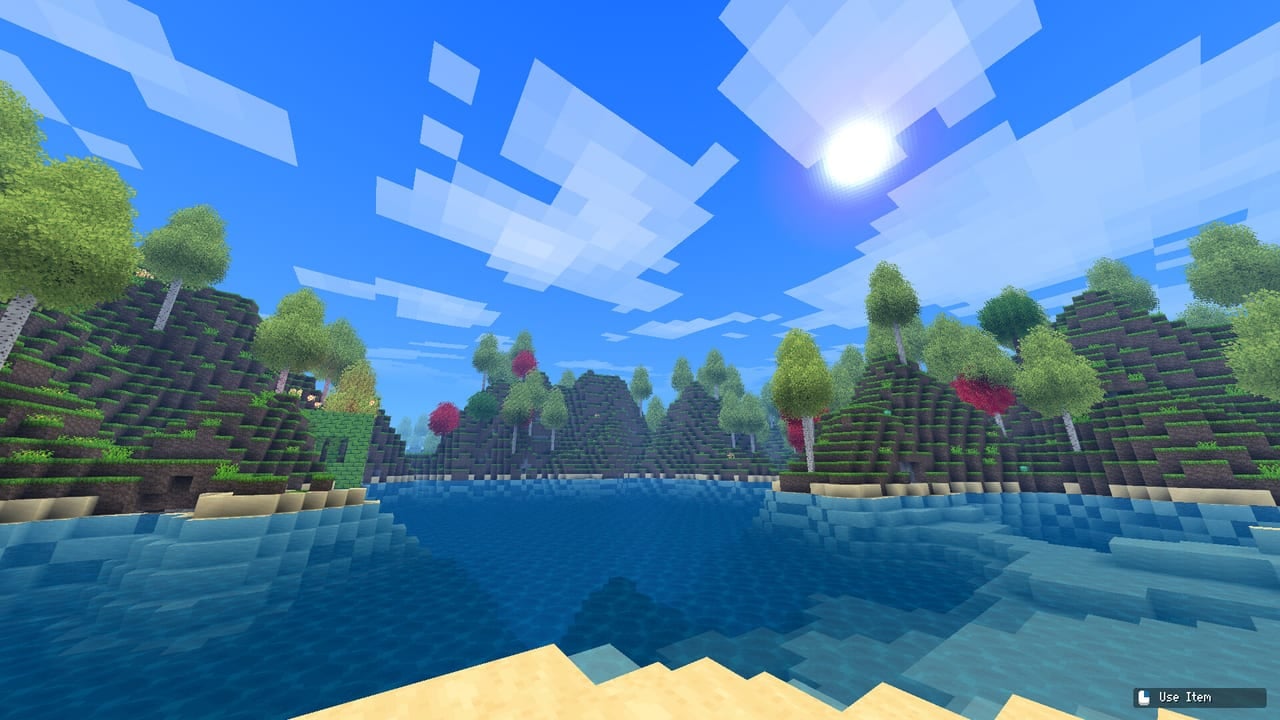
Allumeria’s building tools are the feature players notice after the first night panic fades. You are not limited to cubes. Any compatible block can become stairs, slabs, fences, or other cuts from a radial menu. Lights are full RGB. The Paint Roller tints almost everything, including emission. Monsters care about whether a block is natural, not whether your hallway is dark. That combination is why a dim cabin can be safer than a sunlit dirt pit.
Shape menu (hold R)
Select a build block, hold R, and pick from the radial slices. Most blocks offer around six styles. Special blocks add extras. Place with right-click. This is how glass stairs and dirt fences exist without flooding the inventory with unique IDs. Bind reminders sit in controls. If the menu feels sluggish on a controller, switch to mouse for architecture sessions; Steam Input is fine for combat, less fine for tiny wedges.
Work top-down on roofs so you are not fighting collision. Scaffold with cheap Planks, then replace. Asphalt, Concrete, Brick, Clay Brick, Red Brick, Sandstone Brick, Framed Glass, and painted cloth all take shapes. Wallpaper has had bugs where it applied to both sides of drywall; if a wall looks wrong, break and replace one face at a time.
RGB light and the Paint Roller
Allumeria ships a full RGB light engine. Mix daylight, torches, and coloured lamps. Painting a light source also tints its emission, so a blue lamp is actually blue, not a white sprite with a sticker. Palettes run colourful, earthy, and pastel. You can paint bricks if grey bores you. There is no “this block cannot be painted” tax on standard build materials.
Use that freedom for readability as much as style. Mark ore tunnels with one colour and dungeon return paths with another. Ice Torches belong in snow so you can see permafrost before it shreds you. Details on cold hazards are in the biomes guide.
Spawn rules beat mood lighting
Monsters spawn on naturally generated blocks. They do not spawn on manufactured floors such as Planks. You can run a dark aesthetic if the floor is crafted. You cannot hide on dirt even under a chandelier. This is the same rule that saves you in getting started. Carry it into large bases: any courtyard of grass is a night arena unless you pave it.
Torches on the surface suppress nearby night spawns. They do not sterilise caves. If you live underground, pave the rooms you sleep in. A later comfort system scores bedrooms so you cannot cheese sleep in an open field. NPCs also check house size, light, and comfort before they will treat a room as home. If a merchant refuses to sell, the house is usually the problem, not the wallet.
Wiring, jelly, and dungeon blocks
Entwinement and painted wires add logic. Same-colour wires connect; mixed colours do not. Gates have flexible I/O. Switches send a single on/off pulse so pressure plates stop double-triggering. This is how you build farms, traps, and door tricks without fighting the old pulse bug.
Forest dungeon bricks, Forest Jelly, and Unstable Dungeon Bricks are not starter materials. Unstable bricks crumble in chains when stood on. Jelly is solid until you equip a Jelly Spoon. Forest Hammer is required to hammer equivalent dungeon bricks after 0.13, which blocks the old cheese. Learn those rules in the Forest Dungeon walkthrough before you steal a stack of pretty green brick for your porch.
Movement toys in a base
Gecko Gloves climb your own walls. Jet Boots and Spring Boots change jump height. Paragliders turn cliffs into travel. Rails and Minecarts need metal. None of these replace a paved floor. Build vertical farms only after stamina trinkets are equipped or you will die recovering from a decorative tower.
Creative-only Door Lockers exist for map makers. Locked doors tell you the key they want on right-click. Iron Keys are not a normal survival drop; Forest Keys are.
Beds in 0.15 come from the Builder NPC, not the Workbench. Sleep needs comfort in an enclosed lit room. Place an NPC Sign to assign houses. Full shop rules: NPC housing. Custom looks live in skins.
When the house is safe, spend the next session on copper via the crafting guide, then plan a raid. Hosting friends in a pretty but unpaved camp is how multiplayer nights go wrong; read multiplayer after you have spare beds and tools. If you are ranking decorative versus combat loot, the trinkets list marks which five slots actually change how a house plays.
Frequently Asked Questions
Quick answers to the most common questions.
How do I make stairs or fences from any block?
Hold R for the radial shape menu, choose a style, then place with right-click. Controls lists the bind.
Can I build a dark base without monster spawns?
Yes, if floors are manufactured blocks such as Planks. Darkness does not spawn mobs by itself. Natural dirt still does.
Does painting lights change the colour of the glow?
Yes. Painting a light source tints its emission. Use RGB lamps plus the Paint Roller for neon or cabin warmth.
Why will an NPC not move in or sell?
Houses are scored on size, light, and comfort. Expand, light, and furnish the room. Sleep also requires a real bedroom, not a field.